/ blog
30 Meters of Ethernet Cable for a 3x3 Room

There’s a pretty popular meme in tech, with its various flavors, but they all point to the same thing: a gigantic solution for a relatively small problem. That’s exactly what I did, hence the title.
My homelab’s whole reason for existing was always to learn, to stop depending on external services for such mundane things as hosting photos, videos, or music. Though with the growing AI wave we all ended up surfing, I couldn’t stay out of it either — I had to self-host some model of my own, even with limited hardware.
I spent a ton of hours mulling over my ideas, creating, deleting, and even re-creating both VMs and LXCs in my Proxmox. I felt a bit overwhelmed, with no defined plan, doing some things almost as a test run rather than for real impact. The range of possibilities is so wide that it’s easy to fall into the temptation of wanting to run before you can walk.
I took a pause.
I deleted a bunch of things I’ll probably reinstall soon enough, paused others, and set some up as part of the startup boot sequence, etc. I started putting things in order: one LXC for Docker, another for Ollama, talking to each other to run self-hosted models, an nginx reverse proxy, and Pi-hole. I needed order, solid DNS resolution, and a way to filter out everything I don’t want to see on the network.
But there was a problem.
None of this was worth much if traffic wasn’t actually routed through it in a coherent, sensible way. It made no sense for only the mini PC to be applying the filters, denials, and other Pi-hole and nginx configs. And this is where a new toy enters the scene: a MikroTik hAP ax².
And this is where I became the meme.
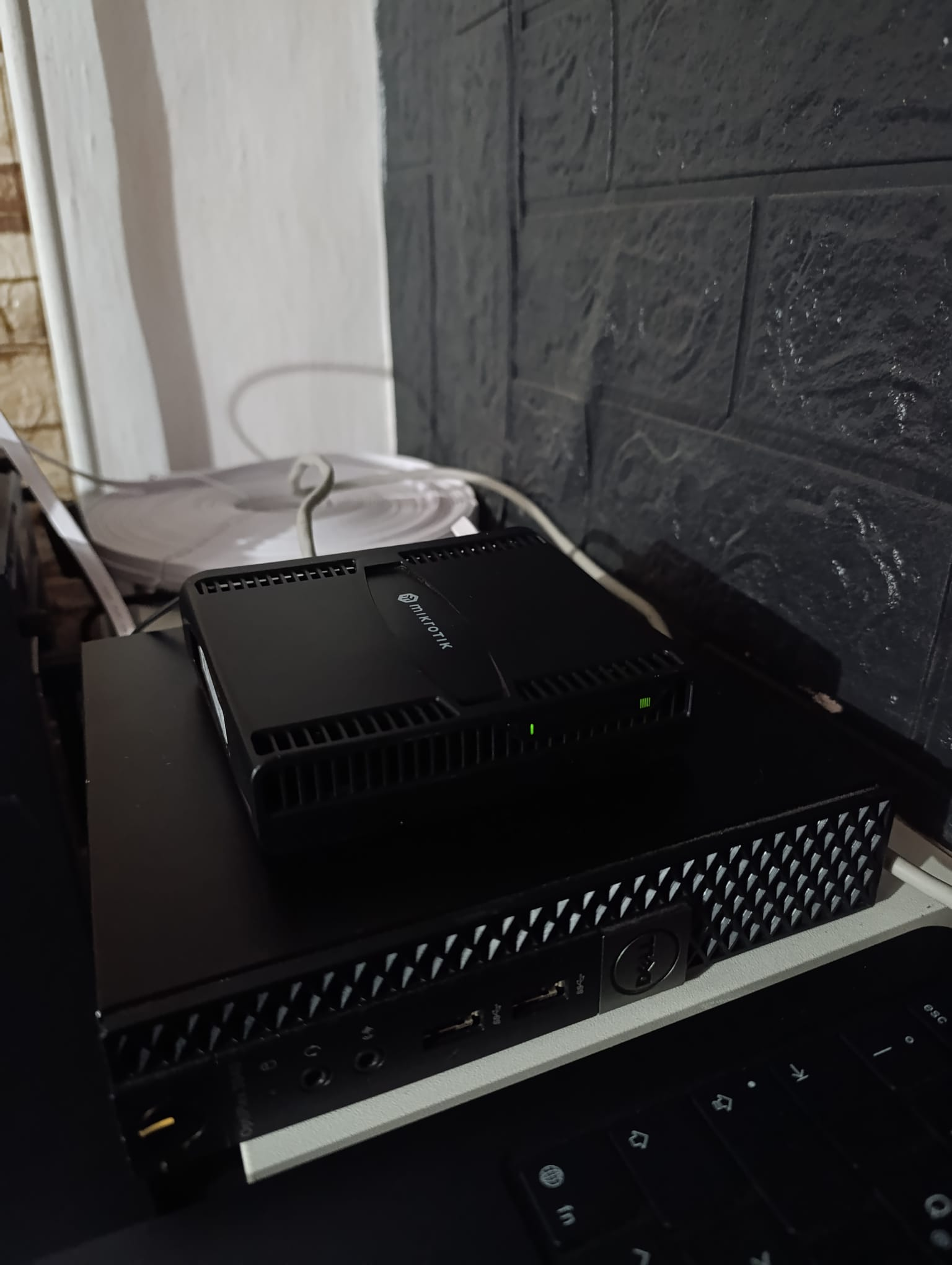

(I preferred the Windows screenshot so the story would hurt more…)
I locked myself out of my own network four or five times, and ironically, when I finally fixed it, I had access to the network but not to the homelab… “Networking.”

So yeah, I got tamed by networking, more than once, and I wouldn’t rule out it happening again — the odds are still very much there.
But anyway, as I write this, I’m happy knowing that at least for now, I have internet the way I want it.
This is the current state after all that chaos:
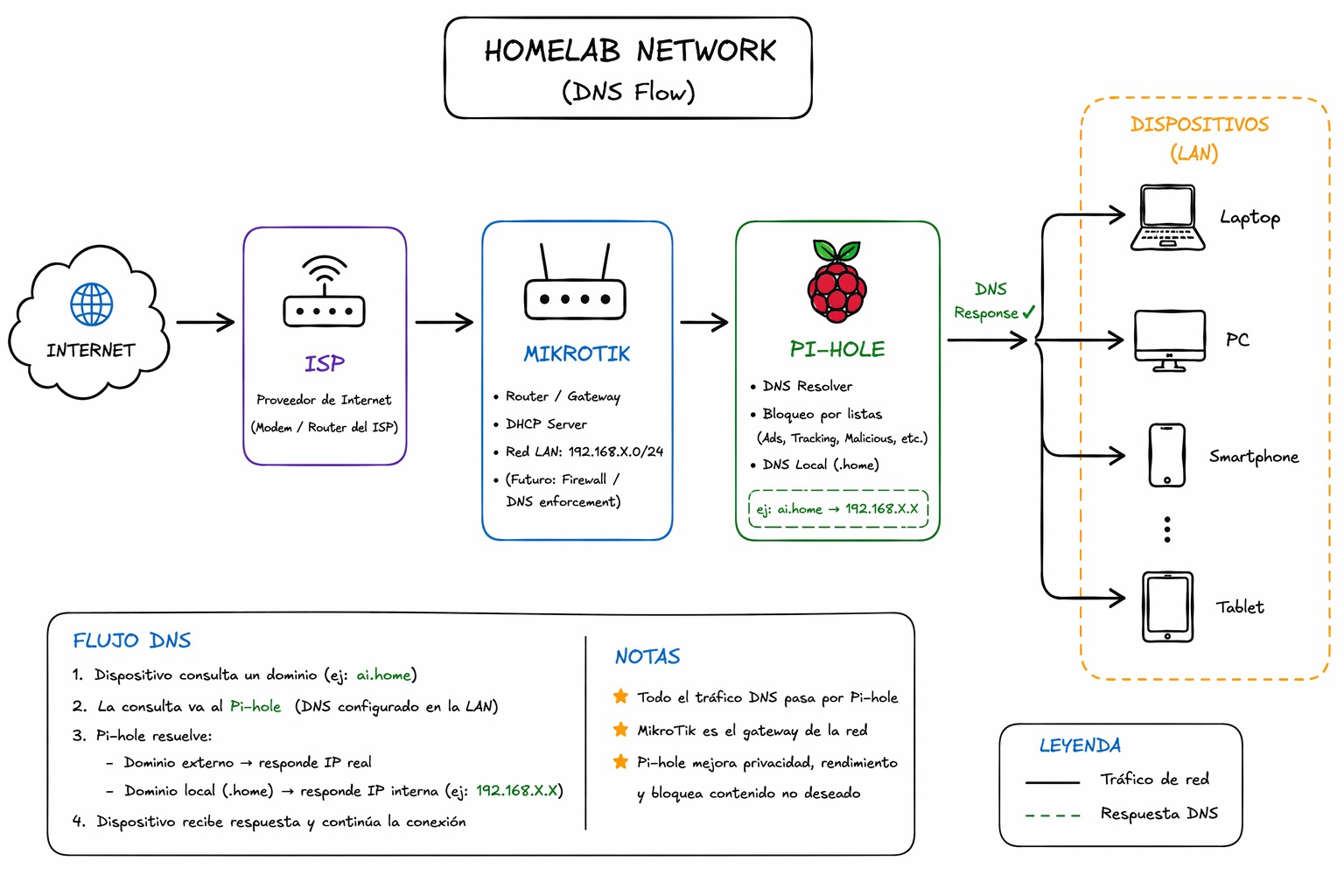
At some point in all that mess, I ended up putting together something that at least makes sense when I look at it from the outside. That’s what the diagram shows. Internet comes in, passes through the MikroTik — which is now the one in charge of the network — and before reaching any device, everything goes through Pi-hole.
And it sounds great, like I know what I’m talking about, like some kind of genius. Nothing further from reality — actually, every time I sit down to tinker with the homelab, I feel like I know less; specialization stops making sense, cross-domain knowledge pays off, while not knowing something punishes you.
It’s no longer just about learning syntax, logic, or theory. Not even about deploying production-ready things or having real users.
It’s about understanding a whole path that’s often ignored in development: where hardware, power outages, local networks, internet exposure, and a bunch of other things I still don’t fully understand all intersect.
But with time, I hope to.
In the meantime, I’ll settle for watching a few metrics of how everything behaves. Nothing too sophisticated, but enough to understand what’s going on.


30 meters of network cable running behind the MikroTik and the mini PC. And a ton of ideas on the table that I still need to sort out.