/ blog
The Duality of Feedback, Don't Get Bitter

One of my daily struggles is deciding what to do given my many interests. It’s impossible to cover them all, to the point that focusing on one ends up “using up” that daily quota, so I live in a constant focus-mind switch. Something that doesn’t bother me — actually, I got used to it.
That said, I can’t deny the efficiency boost when the focus is more concrete, but I’d rather save that part for working hours.
For me, my interests, my hobbies… I prefer doing things my own way.
That’s where I found, in the homelab, first the abyss. Then, salvation. Something almost as poetic as it is biblical.

Out of nostalgia, I brought a Dragon Ball online game back to life. It started self-hosted, and now lives on a VPS, leaving my lab as something purely experimental. Still, this stretch gave me something my previous failed attempts at different products had never managed to get.
Real users, giving constant feedback.

Grafana’s numbers kept climbing little by little. I could see how some maps got more traffic than others, where people preferred to level up, where to loot, where they had the most fun overall. It was the first time I had real data on people using something I’d built, and, for the first time too, I stopped thinking only about what I wanted to do and started asking myself what they needed.
And there, with that data, I understood something sad. The game, despite having lots to do, tons to explore, a map that fit Dragon Ball well… had a huge problem.
The world wasn’t alive.
I started logging in with the GM account at all hours. Every time I saw a player online, I’d head over to them and ask for feedback. Everyone asked for different things — stuff they missed from other games, stuff they’d like, stuff they’d do differently.

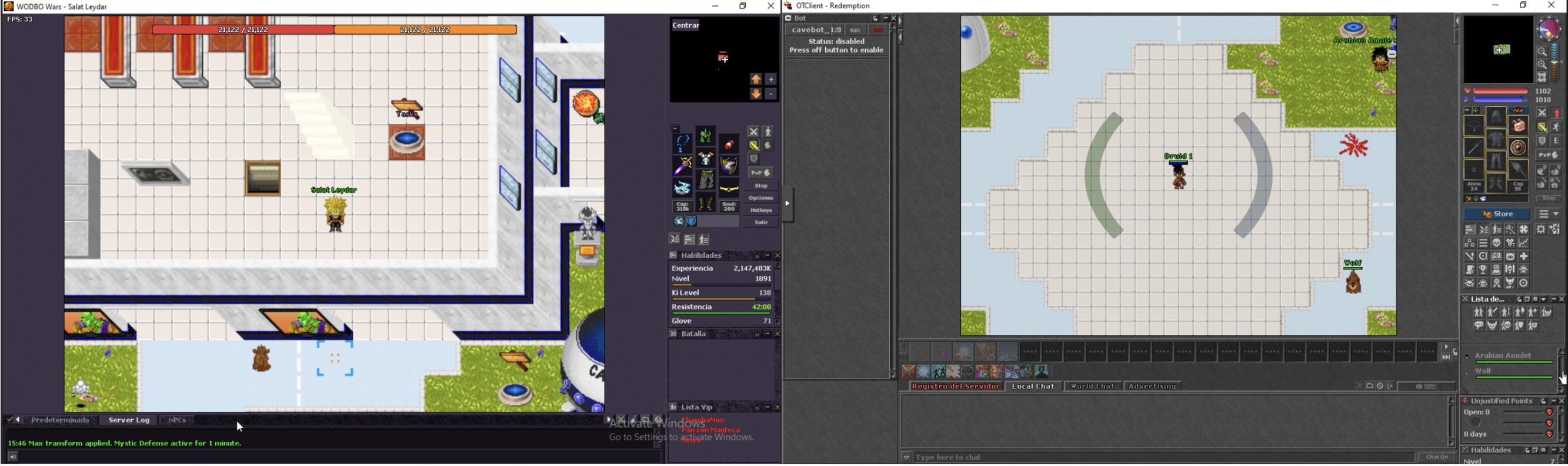
I started going through every request and ran into a reality check. I was working on an 8.60 base — popular in its niche, but way too old-school for today. It didn’t support mount systems, flying, fishing, nor… nor… nor…
Fixing this meant migrating. As obvious as saying “I’ll do it tomorrow.” But like every migration, it meant completely changing my structure.
To put it in perspective, version 8.60 is from 2010, and it’s being migrated to OTClient Redemption (Canary) 1525. That’s 16 years of optimizations, fixes, and a community that kept evolving while this project stayed frozen in time.
And great, I can do it while I learn this new ecosystem. It takes time, but it’s doable.
But there was something that kept nagging at me.
Even doing all this, I’d still be left with a much more radical problem.
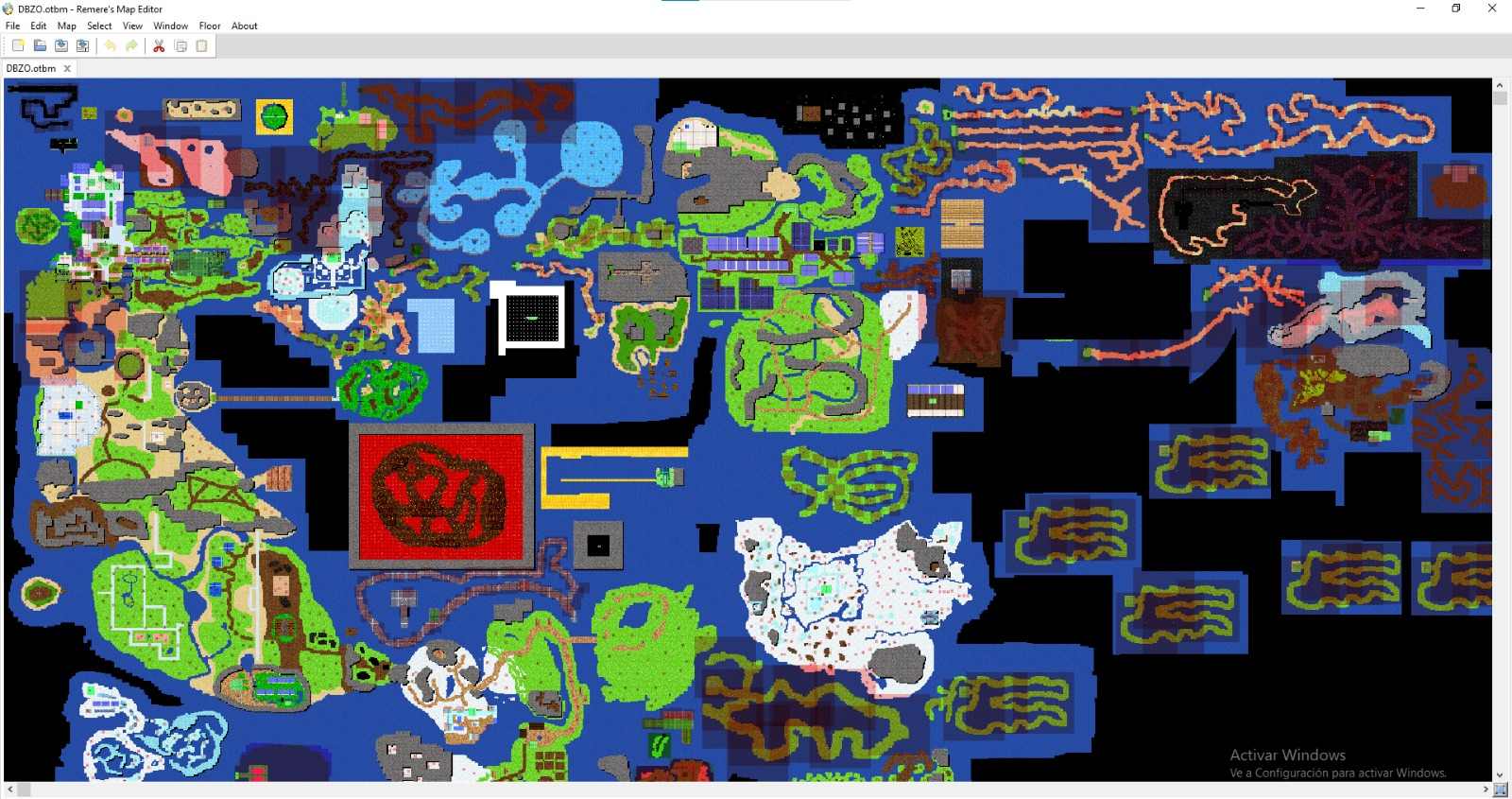
The map.
Which, while it looks good, has a design that leans on portals and safe zones everywhere, keeping player interaction way too low. Making the game, even with players online, feel more dead than alive.
And there I understood something else.
The problem wasn’t just technical anymore.
It was a design problem.
Among the issues reported through the portal, there was everything. People being aggressive, while others wrote step-by-step reproductions of a bug in painstaking detail.
At first, I couldn’t help valuing the latter far more. It was easy to appreciate a well-written, structured report, almost ready to turn into a ticket.
But over time, I started noticing a pattern.
A lot of the aggressive reports were pointing at real problems. They were written in the worst possible way, sure, but they still pointed at something that deserved attention.
To the latter, thank you.
To the former… also thank you.
Because even their lack of manners still gave me useful input.

If this experience taught me anything, it’s that listening to feedback doesn’t mean only listening to those who know how to communicate it well.
It means trying to understand what problem lies behind the words.
And I think that applies well beyond a Dragon Ball server.
At work.
In a personal project.
In a startup.
Even in life.
People are different behind the curtain.
And learning to separate tone from message is probably one of the most uncomfortable skills, but also one of the most useful ones I ended up developing.